The Scottish Net Zero Economy in 2025
Scale, industrial strength and regional opportunity
Last updated:

This report highlights a genuine Scottish success story, and one that is continuing to transform the economic landscape of Scotland – from Aberdeen and the North East of Scotland, the site of a historic evolution from oil and gas to offshore wind and energy system integration, to other parts of Scotland where renewables, environmental services, and grid reinforcement are reshaping local labour markets.
The evidence shows that Scotland’s net zero economy is established and economically material. Net zero-related industries support £10.2 billion in Gross Value Added (GVA) and support over 105,000 jobs, representing 4.9% of Scotland’s total economic output and 3.9% of employment.
These contributions are not confined to a narrow segment of the economy. Net zero-related activity spans energy generation and infrastructure, advanced manufacturing, engineering, construction, environmental services and professional, scientific and technical services.
Scotland's net zero economy is predominantly made up of small and medium-sized enterprises. Around 90% of identified firms are classified as SMEs, including approximately 58% micro-enterprises, 19% small firms and 13% medium-sized businesses. This broad SME base spans supply chains, engineering services, low-carbon technology and environmental services, underpinning the sector's reach across Scotland's regions.

At a local level, the sector’s footprint is particularly significant in areas where net zero-related industries account for the highest share of total economic output. In Perth and Kinross, net zero-related industries account for 9.2% of total local GVA, the highest concentration in Scotland. In Aberdeen City, the sector supports 6.7% of local GVA and 6.8% of employment, reflecting the region’s established energy engineering capability.
Other areas, including East Lothian, Highland and Aberdeenshire, also rank among those with the highest relative exposure. These figures indicate where local economies are most reliant on net zero-related activity as a proportion of overall output and employment, rather than simply reflecting large urban centres. The pattern demonstrates that net zero activity is not randomly distributed, but concentrated in areas aligned with Scotland’s industrial strengths in energy, engineering and infrastructure.
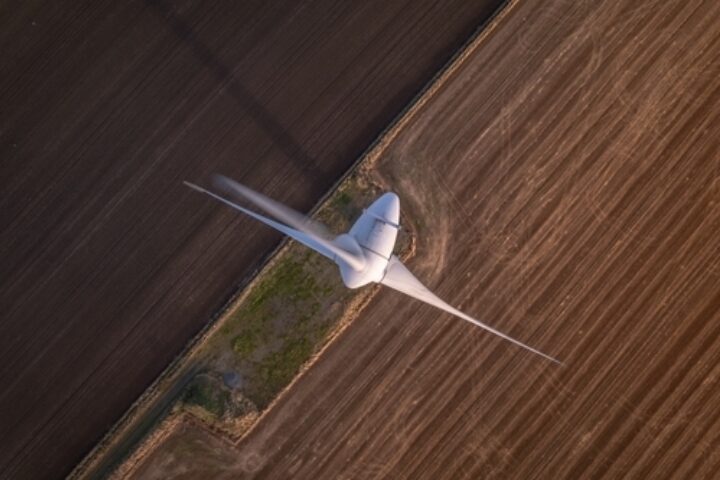
Looking ahead, Scotland holds a central position in the UK’s energy infrastructure pipeline. Approximately £211 billion of planned UK energy infrastructure investment is located in Scotland, representing 34% of the UK’s total pipeline value and 88 GW of capacity. Major projects across offshore wind, grid reinforcement and storage infrastructure illustrate how nationally contracted capacity translates into local development activity. Recent procurement outcomes under Allocation Round 7 provide further visibility on future deployment, while workforce projections indicate that clean energy employment in Scotland could expand significantly by 2030.