Marginal Gains: how wind is pushing gas out of the power market and cutting costs
Growth in British renewables cutting electricity prices by up to a quarter.
Last updated:
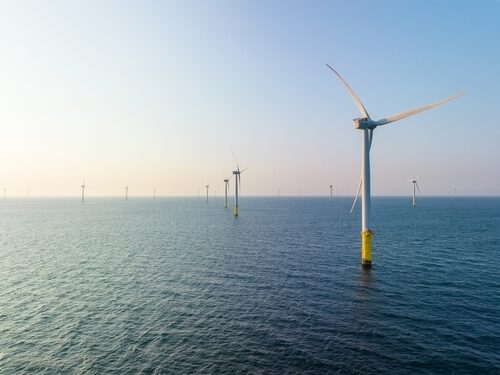
The analysis suggests that the day-ahead wholesale price in 2024 could have been up to 33% higher if there had been no large-scale wind capacity and gas made up most of the difference.
The gas crisis exposed a weakness in GB wholesale electricity markets, with volatile international gas prices driving up the running costs of gas generators that usually set the marginal price on day-ahead markets, dramatically inflating the price ofelectricity.
The effect continues, and various options have been proposed to try to reduce this disproportionate influence of gas on electricity prices, to reduce costs now and insulate customers from future gas crises.
However, one solution is already at work, with renewables displacing gas power plants from the day-ahead market, such that prices are set by more efficient gas power plants or other sources. This mechanism is often cited in the debate over the clean power transition, but does not seem to have been quantified publicly.
This report illustrates the process of displacing gas power plants from the marginal pricing curve, focussing on wind capacity connected to the GB transmission networks. It attempts to estimate the impact on prices due to large-scale wind by considering the opposite situation, i.e. if there had been less (or no) wind capacity.
The analysis suggests that the day-ahead wholesale price in 2024 could have been up to 33% higher if there had been no large-scale wind capacity and gas made up most of the difference. That is, existing wind farms connected to the transmission grids may have cut the day-ahead price by up to a quarter (25%) in 2024, which is about £24–25/MWh off day-ahead wholesale prices, or about £27–28/MWh if losses are applied to convert to retail values.
Links between day-ahead markets and longer-term trades where the rest of the supply is traded mean that savings of a similar size are likely to be seen for all supply. In which case, cuts in prices due to wind power could roughly match the £27/MWh on bills that supports wind farms via the RO and CfDs.
Without the savings from wind power, the average day-ahead price of £73–76/MWh in 2024 could have been as high as £96–101/MWh. These results are relevant to the current CfD auction for new renewables (AR7), which has been criticised for having potential strike prices have that are higher than current wholesale prices.
But without existing renewables displacing gas power plants, the differences would be much smaller or even reversed.
The results are also relevant to the wider debate over the clean power transition, highlighting a ‘hidden saving’ that can be viewed alongside the costs associated with renewables. Future analysis could consider the net effects, and how these are likely to evolve as some costs fall in the near future and the savings on marginal prices grow as more renewables are deployed.
Note: A typo has been corrected since publication: As per the comment in footnote 6, the second paragraph on page 8 has been amended to say that gas set the price about 85% of the time in 2024, not 15% as in the first version, which might have been obvious from the context.
New @ECIU_UK analysis: ?? renewables deliver a ‘hidden saving’ by cutting electricity prices by up to 1/4
https://eciu.net/analysis/reports/2025/marginal-gains-how-wind-is-pushing-gas-out-of-the-power-market-and-cutting-costs