Putting food inflation on a diet
How healthier diets have reduced exposure to rising food prices and climate-related shocks.
Last updated:
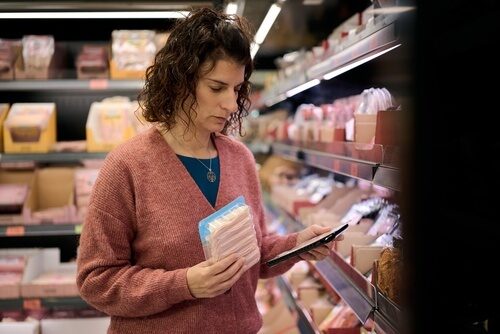
Food inflation has not been evenly distributed across the supermarket basket. In recent years, some of the sharpest price rises have been concentrated in foods that the average British household consumes more of than is recommended by dietary guidelines, including meat, chocolate and some dairy products. At the same time, extreme weather has increasingly disrupted agricultural production in the UK and overseas, adding to price pressures for a number of these foods.
This report models what food inflation would have looked like for a household whose spending was more closely aligned with the Eatwell Guide. It compares two price indices built from exactly the same ONS food price data: one using current expenditure weights and another giving less weight to foods such as meat, dairy, chocolate and confectionery, and more to fruit, vegetables and fish.
Differences between the two therefore reflect what households buy, rather than different assumptions about prices. The results suggest that healthier, more balanced diets have provided meaningful protection from recent food inflation.
Over 2025, prices rose 4.5% for the standard basket compared with 2.7% for the balanced basket - 40% less inflation. The Eatwell-aligned basket experienced lower inflation in every month of 2025, with the gap widening through the year, reaching 2.1 percentage points in October, when standard food inflation was 4.9% compared with 2.8% for the healthier basket. Chocolate was the single largest individual contributor, accounting for 32%1 of the downward pressure on inflation. Chocolate prices have risen dramatically in recent years, following extreme weather in West Africa, where Côte d'Ivoire and Ghana account for around 60% of global cocoa production.
Meat was one of the most important contributors to lower inflation in healthy basket. Meat categories accounted for around 22% of the downward pressure on inflation over 2024 and 2025. Beef and veal alone accounted for 9%, and lamb and goat a further 6%, meaning together they contributed almost 15% of the downward pressure. Both experienced average year-on-year inflation of around 10% over the period. Meat prices have been among those most exposed to recent climate-related disruption.
Wet weather, drought and heat have reduced pasture availability, increased feed costs and contributed to falling cattle and sheep numbers, which - for biological reasons - can take a long time to rebound once cut. As a result, beef prices have risen more than a quarter since January 2024, while separate impact modelling found that lamb prices were pushed around 15% higher following the wet winter of 2023–24 and 21% higher following the 2025 drought.