The role of carbon dioxide removal in the UK’s net zero strategy
What is it? How will it work? What are the options? And what's ahead for the UK?

By Tom Cantillon
Share
Last updated:
Carbon dioxide removal (CDR) enables the ‘net’ in ‘net zero’ by actively removing CO2 from the atmosphere to compensate for residual emissions. In the UK’s net-zero strategy, CDR is mainly envisaged to counterbalance emissions associated with agriculture and aviation, as well as residual emissions from other sectors such as heavy industry.
Afforestation, Bioenergy with Carbon Capture and Storage (BECCS), and Direct Air Carbon Capture and Storage (DACCS) are expected to make up the majority of CDR activity in the UK.
Questions remain about the readiness of CDR technologies, including ability to scale, financing, and issues regarding CDR deployment trade-offs and mitigation deterrence.
Key term: Afforestation

Conversion of land to forest that historically has not contained forests.
Key term: Direct Air Carbon Capture and Storage

Chemical process by which carbon dioxide is captured directly from the ambient air, with subsequent storage. Generally, DACCS consists of a machine where air is either passed through a solid filter or a liquid that captures carbon dioxide. The filter or liquid are then heated to release the trapped carbon dioxide, which is then transported for geological storage.
Key term: Bioenergy with carbon dioxide capture and storage (BECCS)
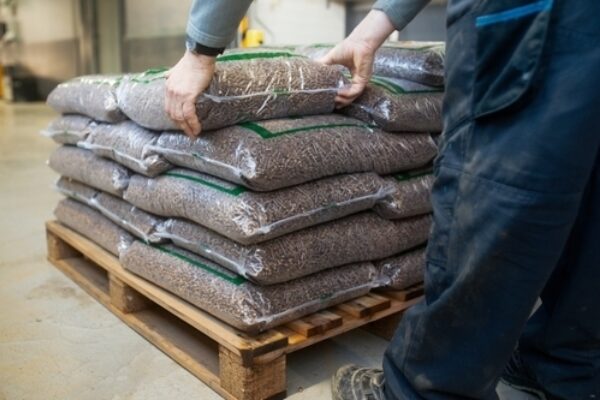
The generation of energy from biomass (e.g. straw, corn stalks or wood pellets) and capture of its resulting carbon dioxide emissions, with geological storage.
What is Carbon Dioxide Removal?
Climate change is driven by the emission of greenhouse gases into the atmosphere. To stop human-driven climate change, emissions need to decrease to close to zero. Any residual emissions (e.g. from so called hard-to-abate sectors such as agriculture) then need to be compensated for through the removal of greenhouse gases from the atmosphere on a tonne-for-tonne basis and durably stored. In this way, the overall impact of these residual emissions is ‘netted out’ to zero – net zero.
Carbon dioxide removal (CDR) refers to any:
- Human driven activity, that;
- Actively removes CO2 from the atmosphere, and;
- Durably stores it in geological, land, or ocean reservoirs.
In this way, CDR can be distinguished from natural processes that remove CO2, such as ocean acidification (by absorption of CO2 from the atmosphere), or human activity that results in no additional CO2 removal, such as basic woodland management.
In the short-term, CDR can help reduce net emissions, in the medium-term it can counterbalance residual emissions, and in the long-term (provided removals exceed emissions) CDR can lead to net-negative emissions – reducing the concentration of CO2 in the atmosphere.
CDR is sometimes used interchangeably with the term greenhouse gas removals (GGR). GGR is a more expansive concept as it refers to activities that remove any greenhouse gas (e.g. methane or nitrous oxide), but the underlying concept is the same. The need for net removals is currently focused on CO2 given its status as a greenhouse gas that persist in the atmosphere for millennia, compared to methane which persists for a matter of decades, though research on atmospheric methane removal is ongoing.
Types of CDR Technology
CDR technologies can be classified in various ways: by how durable the carbon storage is, by what process the CO2 is captured (biological or geochemical), or by where the captured carbon is stored – e.g. in biomass, marine sediments, geological formations or the built environment.
For ease, CDR can be grouped into two categories:
Conventional CDR covers well-established CDR methods, such as woodland creation, soil carbon sequestration and peatland restoration.
Novel CDR covers all other CDR methods such as BECCS, DACCS, or biochar.
This is the categorisation used by the State of Carbon Dioxide Removal report, one of the main assessments of the role of CDR in reaching net zero emissions.
Key term: Biochar

Relatively stable, carbon-rich material produced by heating biomass in an oxygen-limited environment. Biochar is used as a soil amendment with the intention to improve soil functions and to reduce greenhouse gas emissions from biomass that would otherwise decompose rapidly.
CDR in the UK’s net zero pathway
The Committee on Climate Change’s (CCC’s) advice on the Seventh Carbon Budget recommends emissions be compensated on a source-sink symmetry basis – i.e. that biological emissions be compensated for with biological removals, and fossil emissions be compensated for with engineered (novel) removals.
In practice, this means that residual emissions pertaining to agriculture and land use will be compensated for through conventional CDR, primarily afforestation and grasslands, with -29.9MtCO2e of removals in 2050. Residual emissions from all other sectors, primarily aviation, will be compensated for through novel CDR methods, primarily BECCS, DACCS, biochar and enhanced rock weathering (ERW), with -35.8MtCO2e of removals in 2050.
Key term: Enhanced Weathering

A method to increase the natural rate of removal of carbon dioxide from the atmosphere using silicate and carbonate rocks. The active surface area of these minerals is increased by grinding, before they are actively added to soil, beaches or the open ocean. The minerals then react with water and the air to produce carbonates, removing atmospheric carbon dioxide.
Considerations in UK CDR Deployment
Financial
Funding for CDR in the UK varies across technology, with BECCS and DACCS raising the highest private capital to date. The policy framework to underpin UK CDR commercialisation is still in development, including market mechanisms and funding models.
The UK government has proposed utilising a Contract for Difference (CfD) scheme for CDR companies, particularly BECCS and DACCS. In this way, novel removals are de-risked by guaranteeing a fixed price for CO2 removed. In the case of BECCS, the government is exploring a ‘dual CfD’ model, whereby a strike price will be agreed for both the energy generated through BECCS, and the CO2 removed. The government has also indicated its intention to include novel removals in the UK Emissions Trading Scheme (ETS) beginning in 2029. A decision on conventional removals’ inclusion, specifically afforestation, has yet to be reached.
Several grant-based schemes exist on the conventional CDR side, particularly around afforestation and peatland restoration. As land management is a devolved responsibility, separate mechanisms exist for England, Wales, Scotland and Northern Ireland.
As with many other early-stage technologies, investment should bring novel CDR down the cost curve. It is currently estimated that by 2030, the costs per ton of CO2 sequestered could be £700/tCO2 for DACCS, reducing to £250 in 2050. A regulatory environment that crowds in private sector investment would help to reach economies of scale.
Conventional CDR is currently £20-48/tCO2 with this lower cost driven by lower implementation costs, and larger relative supply. If rules governing what kinds of removals can be used to compensate for specific emissions sources (e.g. if fossil emissions can only be compensated for with novel CDR like BECCS and DACCS) then the price for conventional removals could reduce further.
In the CCC’s advice for the 7th Carbon Budget, they apply the ‘polluter pays principle’ to determine who bears the costs for CDR. Therefore, the CCC’s balanced pathway assumes that aviation, and other industrial emitters, will pay for the CDR necessary to compensate for their residual emissions.
Technology readiness
Currently, the vast majority of CDR taking place in the UK is conventional, particularly afforestation and grasslands. Comparatively, the UK has a relatively small land carbon sink (its ability to soak up CO2), due to having relatively little forest cover compared to other countries, and large areas of drained peatland that release significant carbon emissions as they degrade (15MtCO2e in 2022). Novel CDR rates are currently modest at just under 8ktCO2e (i.e. 0.008MtCO2e).
In general, novel CDR techniques are at a lower technological readiness level (TRL) than conventional CDR, with BECCS and DACCS at a TRL of 7 and 6 respectively (out of a possible 9, meaning technology is fully operational). The current pipeline of novel CDR projects is 2.8MtCO2 meaning further investment will be required to reach the government’s ambition of 5MtCO2 by 2030.
Measurement
Measurement, reporting and verification (MRV) frameworks for conventional CDR are well established, particularly in the land-use sector i.e. knowing how much carbon newly planted trees will suck from the atmosphere. Novel CDR MRV is more nascent and is a critical component of ensuring an effective scale-up of CDR activity. The British Standards Institution is currently developing several ‘Flex’ (fast track) standards for BECCS and DACCS, but MRV frameworks are still lacking for biochar and enhanced rock weathering.
Perceptions
Public awareness of CDR in the UK is low, with conventional CDR techniques having the highest level of salience with the public. Reassuring the public that the techniques are safe and scientifically proven are key to enable CDR’s social licence to operate in the UK.
Additionally, there is a perception that CDR could be used to delay or reduce efforts to cut emissions – so called mitigation deterrence. Careful rules around CDR usage are needed to avoid this taking place.
Looking ahead
On March 31st, the Department for Energy Security and Net Zero commissioned an independent review of the role GGRs can play in assisting the UK to reach net zero by 2050. This review will publish in October, and will outline potential deployment options for GGRs, identify barriers to scaling, and opportunities of deployment, amongst other topics. Of particular interest will be the report’s treatment of biomass, central to BECCS, and the degree to which it foresees imported biomass playing a role in the UK’s CDR activity. Additionally of interest will be any exploration of the potential for balancing energy crops production in the UK with other agricultural and nature goals, such as domestic food production and biodiversity.
The role of carbon dioxide removal in the UK’s net zero strategy from @ECIU_UK https://eciu.net/insights/2025/the-role-of-carbon-dioxide-removal-in-the-uks-net-zero-strategy
Share