The race for net zero
The UK net zero economy and the transition to a competitive future
Last updated:

The UK’s transition to net zero is reshaping the structure of the economy. What began as a decarbonisation challenge has evolved into a system-wide economic transformation, influencing how energy is produced, how industries operate, and where economic activity is located. This report assesses the net zero economy’s scale, structure and economic significance, and its contribution to competitiveness and regional investment.
The net zero transition is economically material. The net zero economy is now a significant component of the UK’s industrial base, generating around £105 billion in Gross Value Added (GVA) and supporting 1.1 million jobs across the economy. Of this, £36.7 billion and 308,000 jobs are directly attributable to net zero companies, with the remainder supported through supply chains and wider economic activity.
The sector has strong multiplier effects. For every £1 of value generated directly, a further £1.85 is created in the wider economy, reflecting deep integration across industries. Net zero activity is therefore not isolated to energy production, but extends into manufacturing, construction, professional services and finance.

A high-productivity source of growth. Net zero-related activity is characterised by high productivity and high-value employment. Jobs in the sector generate on average £119,300 in GVA per full-time job, around 48% above the UK average, and are associated with an 11% premium on UK average wages.
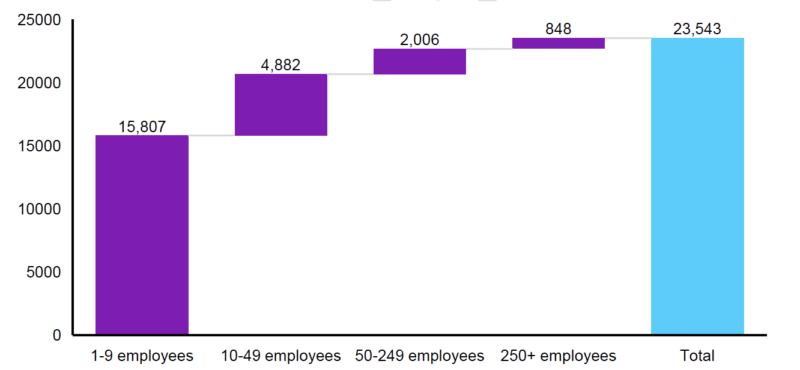
A broad and entrepreneurial business base. The net zero economy is underpinned by a large and dynamic business population, comprising of 23,500 active companies. The sector is overwhelmingly SME-led, with over 96% of firms classified as small or medium-sized enterprises.

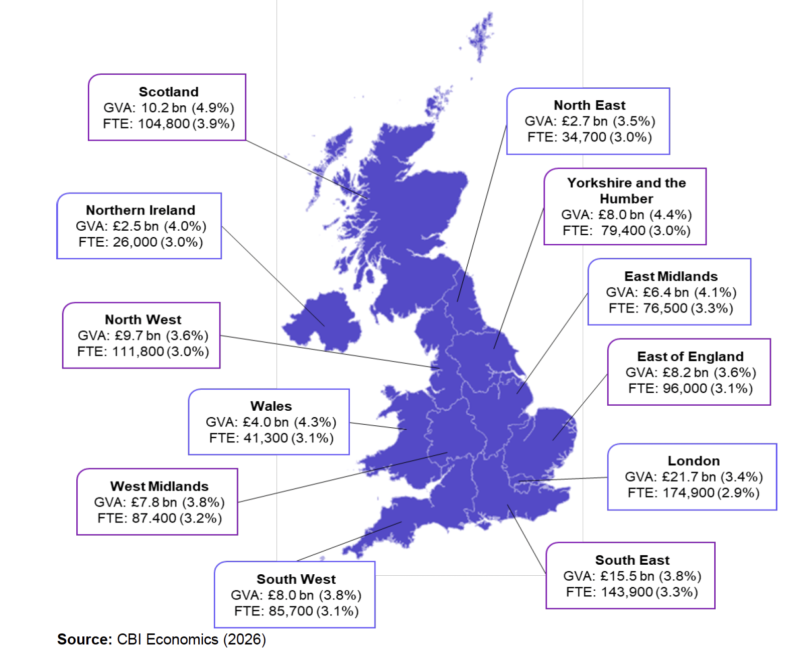
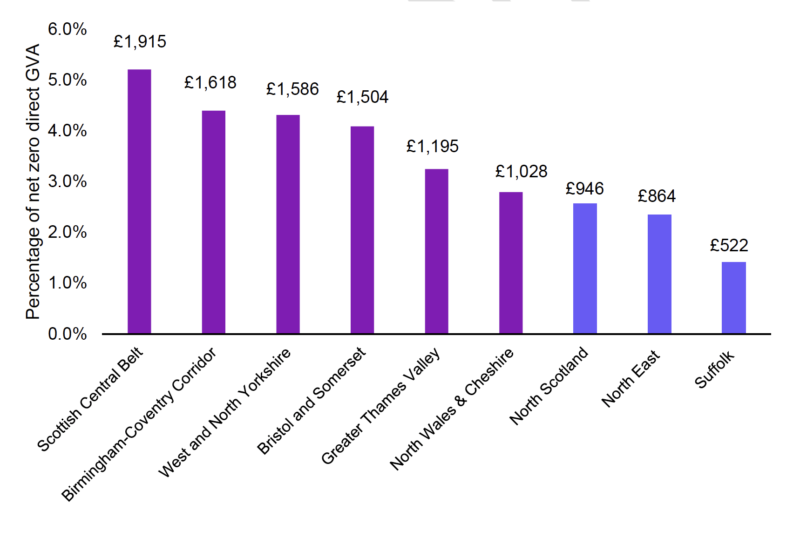
A geographically distributed economy. Investment in the energy and climate transition is happening across all regions and nations of the UK, supporting jobs and value creation in every part of the country. While the largest absolute contributions are concentrated in major economic centres such as London and the South East, the relative importance of net zero is highest in industrial and energy-focused regions, including Scotland, Yorkshire and the Humber, Wales and the East Midlands.
A substantial investment pipeline. The UK’s transition is underpinned by a significant pipeline of energy infrastructure investment, comprising approximately 262GW of capacity and £455 billion of potential investment. Around two-thirds of this pipeline is already in active development or under construction, indicating both strong forward momentum and the scale of delivery required.
Realising these opportunities critically depends on policy stability and economic conditions that enable sustained investment to maintain the UK’s ability to translate ambition into delivery at scale.