Impact of heatwaves and drought on UK harvest prospects in 2026
Yields are below the 1o-year average for wheat, spring barley and oats, with average yields for winter barley and good, above average yields for oilseed rape.
Last updated:
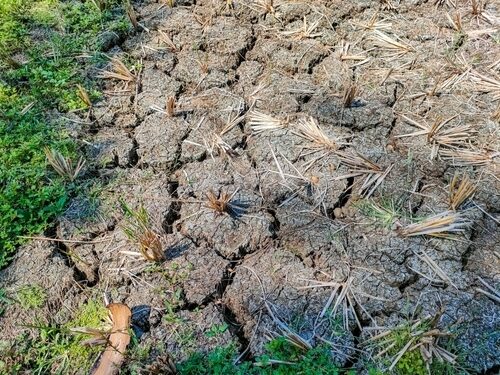
Harvest 2026 is on track to be the worst harvest on record, going back to 1984 when detailed data from Defra dates back to.
In 2026 the UK was hit by an unprecedented series of heatwaves in May, June and July, following a very dry April in England and then record-breaking lack of rainfall in July, the driest on record in England and Wales.
The cumulative effect of these extreme weather events on UK agriculture has been significant, with impacts across all sectors of farming. This analysis focus’ on the impact on the UK arable sector, and specifically on wheat, spring and winter barley, oats and oilseed rape. Previous ECIU analysis has used these crops to quantify the impact of extreme weather and climate change on UK harvests.
In order to try and isolate the impact of this summer’s drought and heatwaves, we compared recently published initial yield estimates for harvest 2026 from the Agriculture and Horticulture Development Board (AHDB) with previous, pre-heatwaves forecasts from the US Department for Agriculture (USDA) Foreign Agricultural Service (FAS) from April (grains and oilseeds) and the European cereals association COCERAL, published in March. These forecasts both expected UK yields at or slightly above the 10-year average after good conditions for the establishment of autumn sown crops in 2025.
The initial AHDB yield estimates now suggest yields below the 1o-year average for wheat, spring barley and oats, with average yields for winter barley and good, above average yields for oilseed rape. At 6.8 tonnes per ha, the provisional estimate for the wheat yield is notably low. As the major UK arable crop and usually highest yielding, if this provisional yield is maintained, it will drive the 2026 to be one of the worst harvests on record. If these yields and crop areas are accurate, it would be the worst harvest on record at 19.5m tonnes. If the COCERAL and USDA FAS forecasts had come to pass, it would have been 22m and 21.3m tonnes respectively, only the 8th or 9th worst in a series of 45 years going back to 1984 and a difference of up to 2.5m tonnes.
At current ex-farm prices, the difference between these earlier forecasts and the AHDB yield estimates is a loss of between £305m and £390m.