Climate and displacement of people
One out of every 67 people on our planet has been forced to flee their homes, and a growing cause is worsening climate change impacts:

By Gareth Redmond-King
@gredmond76Share
Last updated:
More than 80% of the world’s refugees come from countries most vulnerable to climate impacts.
Currently, people who move mostly do so within their own country – often to more urban areas, which are perceived to have greater infrastructure and opportunities, or to neighbouring countries.
Coping with growing numbers of people in cities puts greater pressure on limited finances, resources and services, which ultimately can destabilise governments.
The UK and other developed nations are mutually dependent on countries worst affected, importing food and manufactured goods, for instance. Overseas aid and ‘climate finance’ from more developed countries such as the UK helps these countries to build adaptation and resilience, which would enable people to stay in their homes and adapt to the growing threats, rather than being forced to move.
Media reporting of a leaked UK Government report suggests experts assess that climate change impacts could drive greater numbers of people to the UK and Europe
Movement through human history
People’s genetic make-up, almost anywhere in the world, reflects centuries of migration around our planet. Humans have chosen to move – to settle, to discover, to seek safety, and to pursue prosperity. But humans are also often compelled to move, with invasion, war, persecution, changing climate and access to food amongst the forces that, throughout history, have caused people to seek safety and shelter elsewhere.
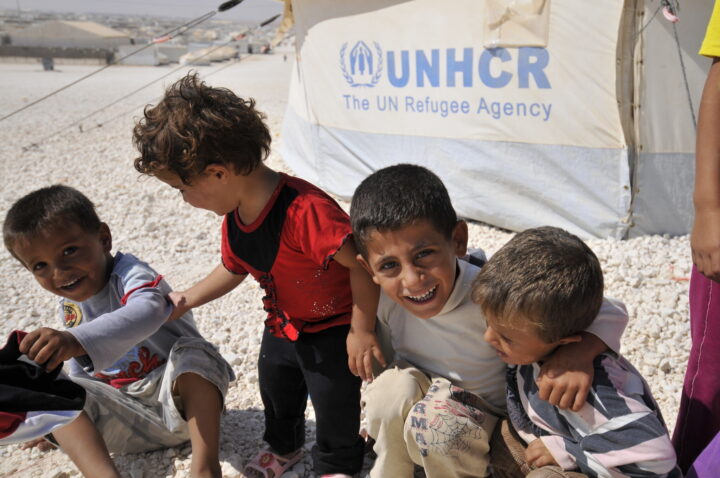
In 2024, nearly 123m people were forcibly displaced – one out of every 67 people living on our planet. That is more than double the number a decade earlier; more than treble that in 2004. If each country was affected equally, that would equate to around one million people displaced in the UK – almost the entire population of Birmingham.
Although climate change has driven change in earlier eras (i) – both before humans, and in human history – this time, for the first time, human political and economic systems are the drivers of the climate change. Worsening climate change impacts driven by fossil-fuelled economies are behind threats to the safety and security of communities everywhere.
“The occurrence of extreme events unprecedented in the observed record will rise with increasing global warming, even at 1.5°C of global warming,” (IPCC).
How climate change drives migration
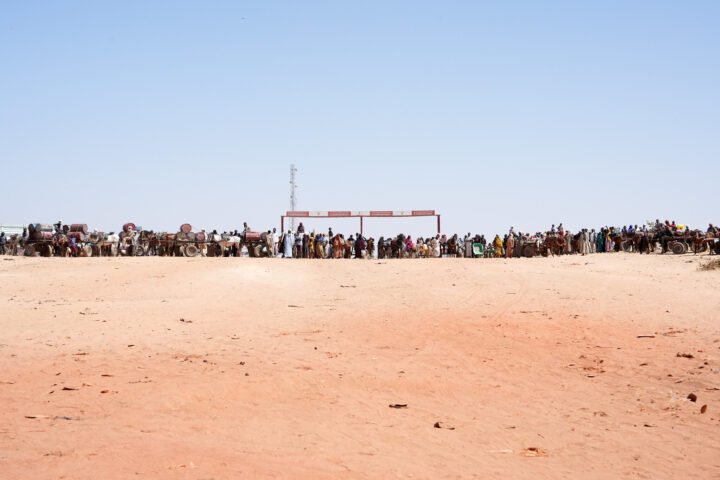
As impacts from climate change worsen, numbers of people displaced are likely to increase. Climate change-fuelled extremes, like desertification and flooding in Chad, and flooding in Pakistan, can hit both food production and the people working in food production. When people can no longer make a living somewhere – such as growing food in arid or flooded agricultural landscapes – then they are forced to move elsewhere in order to make money to survive.
A 2026 UK national security assessment of the risks posed by global biodiversity loss warned: “cascading risks of ecosystem degradation are likely to include geopolitical instability, economic insecurity, conflict, migration and increased inter-state competition for resources.” The Times newspaper reported that a fuller, unpublished version of the report suggested “the degradation of rainforests in the Congo and the drying up of rivers fed by the Himalayas could drive people to flee to Europe”. However, until the full report is published, it is unclear what evidence this rests on, given that most people who are displaced now only travel relatively short distances, rather than migrating across continents, with many experts stressing that there is not yet the evidence that climate change impacts will lead to mass, long-distance migration.
Climate change is also a ‘threat-multiplier’, increasing the severity or frequency of other threats to livelihoods, health and life. That includes poverty, highly marginal agriculture, insecure food supplies, civil unrest and conflict.
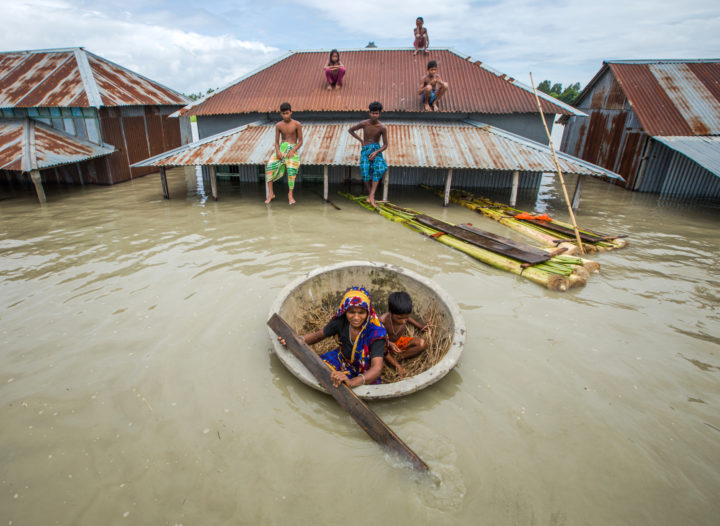
Whether short-term or longer-term, whether direct (like sea-level rise) or indirect (like conflict), when these threats combine they can make staying put untenable. More than 80% of refugees in the world come from countries most vulnerable to climate impacts, and least equipped to cope. Those countries also host around 70% of people internally displaced by conflict or violence.
The Internal Displacement Monitoring Centre (IDMC) reported that, at the end of 2024, a record 83.4 million people (68%) had been internally displaced – i.e. forced to leave their homes, and were living elsewhere within their own country. That number is more than twice the number the IDMC reported in their first global report a decade ago. Of 66 million internal displacements in 2024, nearly 70% (45.8 million) were caused by disasters (as distinct from conflict and violence). These were mostly in the form of storms and floods (44.3 million), which accounted for 97% of all disaster-related internal displacements.
A recent study suggested global GDP could be slashed by half by the later part of this century; another estimated nearer a third. Either would be catastrophically destabilising, but the most recent of the studies suggested the price for avoiding these losses is a comparative bargain, at less than 2% of global GDP now.
CASE STUDY – Shams, from Niger, who is now living in Tees Valley, in the UK:
“I grew up in Niger in the 1980s, when droughts were rare. Today, my homeland burns under temperatures that regularly reach 50°C. Our harvests once gave us everything we needed - sorghum, millet, beans, vegetables. Now with extreme drought followed by devastating floods, nothing grows as it should. When the harvests fail, there is nowhere to turn. The bitter irony cuts deep. Niger sits on wealth most countries would envy—uranium, gold and oil. Yet 80% of our people have no electricity. The uranium that powers Europe's homes comes from our soil, while our own homes remain dark.
“Every August 3rd - our independence day [from colonisation by France, up to 1960] - Niger has a national tradition. Every citizen plants trees to fight desertification. Think about this: one of the world's poorest countries, a country with almost no carbon footprint, fighting desperately against a climate crisis we didn't create. We didn't have an Industrial Revolution. Most families don't own cars. Yet we pay the harshest price for the world's pollution. People don't migrate from Niger because they want to. They leave because the land that fed us for centuries can no longer support life. Here in Britain, I watch people debate climate change as an abstract future threat. For Niger, it's not the future. It's our past, our present, and—unless something changes—our death sentence." [Source: City of Sanctuary UK]
Where do people move to?
When people are displaced by crisis, they generally move within their own country – often to cities – or flee to neighbouring countries, which may not have the resources and infrastructure to support. However, up to 40% of those displaced will go on to travel further afield. As more people are forced to move, more may need to go further to find safety, adding to people migrating many thousands of miles.
At the moment, drawing a direct correlation between climate change impacts in one part of the world and, for example, people who make the crossing across the Channel to seek the UK’s protection is not straightforward. The top nationalities represented amongst those who enter the UK this way include people from authoritarian, unstable and/or war-torn nations like Afghanistan, Sudan, Iran, Eritrea and Syria.
Helping people adapt to change…and the limits to that
Individual people and communities confronted with growing threats will increasingly be forced to choose between seeking help to remain in their homes, or help to enable them to plan to move safely. Either way, financial assistance is essential for the world’s poorest people facing this choice. That can come in many forms, and British people have long enthusiastically embraced supporting vulnerable people overseas through charity appeals like Comic Relief, who work to support communities to build resilience to climate change impacts, including supporting farmers and communities in Brazil to develop their own local sustainability solutions, for example.
But financial support comes in greater volume in the form of assistance from wealthier nations to poorer ones. The UK has been disbursing £11.6 billion in climate finance over five years, up to March 2026. Whilst the Overseas Development Institute contends that few nations meet their ‘fair share’ of climate finance, the UK is one of the largest providers in volume terms, alongside Japan, Germany, France and, until recently, the US.
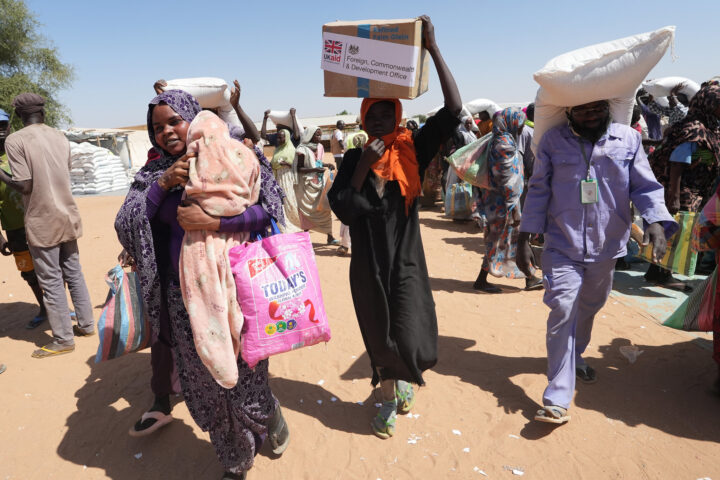
Adaptation, and financial support for it, are key pillars of the 2015 Paris Agreement. At the UN climate COP29 in 2024, an agreement was reached that wealthy nations would raise the collective commitment from $100 billion a year, to at least $300 billion a year, in the context of acknowledging that the overall need is $1.3 trillion a year by 2035. Despite the UK’s cutting its overseas aid budget, we will be expected to live up to that COP29 commitment, directly providing, and facilitating, more from 2026 onwards.
There can be mutual benefits – ‘donor’ countries secure food supplies, and help bolster stability and security. Governments do this via development aid and international climate finance – finance which can support adaptation on the part of farmers and food producers in climate vulnerable areas, that also protects the ability of those farmers to grow food which we import from those climate hotspots.
CASE STUDY – Pakistan
Pakistan has been hit by devastating flooding several times in recent years, displacing many who not only lost their homes, but also their livelihoods. Pakistan has a higher than usual rate of migration from rural to urban areas.
UK climate finance supports Pakistan to grow rice (for which it is the second largest supplier to the UK), as well as other key export commodities like wheat, sugarcane and cotton, via several projects including one under the Green Climate Fund (GCF) called ‘Acumen Climate Action Pakistan Fund’. This project aims to establish an $80 million climate adaptation-focused investment fund in Pakistan, providing patient capital (i.e. long-term debt or equity investment prioritising sustainable growth) to agri-businesses.
The fund's goal is to improve the climate resilience of vulnerable farmers and their livelihoods by providing access to climate adaptation solutions for smallholder farmers – to help farmers to access innovative solutions to become more resilient in the face of climate impacts. It seeks to build farmers’ capacity by training them in water management, intercropping, mulching, the cultivation of heat-, drought- and salt-tolerant crop varieties and integrated pest management (IPM). Additionally, $10 million in technical assistance will provide targeted support to improve the business models of companies seeking investment, and build the overall climate resilience of smallholder farmers and the ecosystem in which they operate. Overall, the project seeks to ensure the business model is commercially viable, to attract capital towards Pakistan's climate adaptation priorities in the vulnerable agriculture sector.
Recent research by the Kiel Institute for World Economics shows that aid, targeted to help recipient nations improve basic public services, substantially reduces people feeling forced to move elsewhere. It also suggests aid investments in improving the resilience of agriculture to a more extreme climate can improve livelihoods, and so reduce the drivers causing people to decide to migrate.
Speaking recently about the UK’s national security assessment, former British Army Defence Services Secretary, and Chief of Defence People, Lieutenant General Richard Nugee (retd) stated:
“I wouldn’t be the first General to say that in order to keep this country safe, you ned to work abroad. And you need to work abroad to reduce threats that are coming to this country. A cut to the overseas aid budget is something that’s had a detrimental effect on our ability to limit threats that are coming to this country from abroad. Take migration for example, if we can do things that enable people not to have to move, but to be able to stay in their own country, that is better for them and better for us. Overseas aid builds understanding and resilience.”
The world is still at the point where we can adapt to climate change-driven impacts, provided we also cut emissions to halt climate change. But there are already places around the world where serious discussion has turned to managed retreat in the face of climate impacts – recognising that, as the IPCC sixth assessment concluded, there is a point beyond which it is not possible simply to adapt to climate change impacts; they are simply too large. This situation is perhaps starkest and best-known in low-lying island states in the Pacific, like the Marshall Islands. But it is happening in many places around the world. In Alaska, melting Arctic permafrost is damaging homes, disrupting food supply chains, and undermining critical infrastructure including roads and clean water production.
Retreat from somewhere that is increasingly difficult to defend from climate change impacts makes migration, in effect, the most extreme form of adaptation to climate change.
It is contested as to the extent to which climate change has played a role in driving or fuelling conflict in places like Syria. Some areas, for instance, will become unsuitable for growing food, and some simply so hot or so water-stressed as to become unliveable. As harvests fail, and homes are lost, unrest becomes more likely, in turn compelling more people to move.
For wealthy Global North nations like the US and European nations, as well as countries like India which has long been fortifying its border with Bangladesh, there have been moves at varying speeds towards securitising and fortifying borders, seeking to exclude more people from migrating. Many advocates for refugees would argue that ever toughening measures to limit and deter are harmful, and do little to achieve the deterrence mainstream political parties hope will enable them to fend off the rise of more extreme, populist parties. Restrictions on various forms of migration can also lead to concerns around worker shortages – particularly in some public services, and in seasonal industries, like agriculture.
But there are also other, more practical reasons which limit the sustainability of this approach.
How migration elsewhere in the world could impact the UK
Our world in the mid-2020s is highly globalised. Covid-19 in 2020 demonstrated how quickly our supply chains are disrupted when commerce and travel elsewhere in the world is affected. In the UK, two fifths of our food is imported from overseas, much of which we cannot realistically grow in the UK.
Crop harvests are vulnerable to climate change impacts. Some vegetables and grains that we both grow here, and import have been hit by extremes in both places. Amidst a cost-of-living crisis triggered by spiralling fossil fuel costs after Russia invaded Ukraine, prices of commodities like rice, coffee and bananas are amongst those which have risen sharply in price, at various times, in response to supply shortages. And in the UK, food items putting most upward pressure on inflation (butter, milk, beef, chocolate and coffee) are some of those most impacted by climate change.
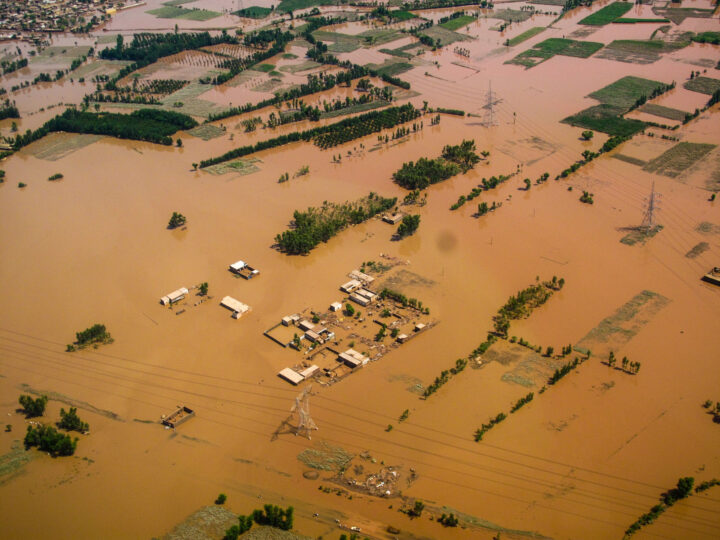
Rice is a good example, where short-term shocks like the floods in Pakistan and extreme heat in India have led to shortages, export limitations, and sharp price rise. India and Pakistan are respectively the largest and second-largest suppliers of rice imported into the UK. In 2022, devastating floods in Pakistan killed 1,700 people, displaced millions more and wreaked havoc on the agricultural sector. The communities most affected were rural and agricultural. In the wake of the floods, up to nine million Pakistanis slid into poverty, and crop yields were hit. In 2023, Pakistan had the second highest number of people internally displaced by disaster anywhere in the world, at 1.2 million. In 2024, there were still 203,000, putting them at number 11.
Many global events, from the 2008 crash, through covid, military confrontations, and trade tariffs show clearly that instability in one place has knock-on effects for the whole world. In already fiscally-constrained times, European nations have turned attention to increasing defence spending, as the future of NATO is in question. This has led some to suggest that this leads to trade-offs, pitting net zero or development aid against defence and security, for instance.
However, there is much evidence to connect climate change and security, showing that humans’ safety and security – nationally and globally – rely on thriving ecosystems, a stable climate, and narrowing the gap between the world’s haves and have-nots.
Could people within the UK be forced to migrate?
This has all also been part of discussion and consultation on the future of coastal towns like Fairbourne, in North Wales.
In the UK, we already suffer from wetter winters, hotter and drier summers, fires and flooding, all threatening our health, homes, food and safety. For example, 2025 saw the UK’s second worst harvest, after experiencing the warmest spring and summer, and the driest spring in over 100 years. These impacts worsen as temperatures rise, but could also take a dramatic new turn putting us at the mercy of much more dangerous climate impacts, at home.
Scientists are increasingly concerned about the threat of failure of the Atlantic Meridional Overturning Current (AMOC) – one part of, which, the gulf stream, moves warmer and cooler waters around the planet, helping maintain our moderate climate. Failure would likely plunge the UK into extremes of cold that would fundamentally change our way of life, including our ability to grow food. It is therefore not a given that people from nations currently best able to offer support to refugees – like the United Kingdom – will not one day need to seek protection ourselves, from other countries in a more volatile climatic situation.
Increasing numbers of people will be forced to move until we reach net zero
We cannot simply continue to adapt to climate change impacts; we must also cut emissions rapidly if we want to stop impacts worsening inexorably. All the climate science agrees that net zero emission globally by mid-century is key to tacking climate change; indeed it remains the only solution we have for doing so.
Halting emissions, to limit further temperature rises – whilst also providing support to poorer nations to adapt to the dangerous climate change already in evidence at 1.3°C of global heating - forms the basis of the Paris Agreement goal to limit temperature rises to 1.5°C. And it is what will ensure the stability globally that will not continue to drive people to move in order to seek safety, security and stability.
(i) Frankopan, Peter. The Earth Transformed: An Untold History. London: Bloomsbury, 2023
Share