Heat stress and UK food imports
More than a tenth of UK food imports are at risk from rising heat stress on farmers in developing nations, with 216 billion potential work hours lost in 2024
Last updated:
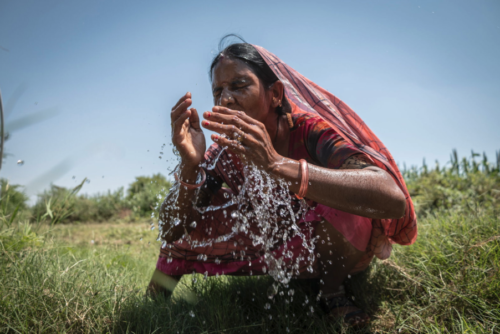
With a powerful El Niño event now confirmed as 80% likely in the coming months by the World Meteorological Organisation, 2027 set the be the hottest year on record, and large parts of the world seeing temperature records smashed by unseasonable heatwaves, heat stress globally is posing a growing threat to the agricultural workers who produce the world’s food.
- In 2024, around 1.5 billion people worldwide – a quarter (25.3%) of the working-age population – worked outdoors. 640 billion potential work hours were lost as a result of heat exposure in 2024.
- Agricultural workers are by far the group most exposed, globally, to heat stress, accounting for nearly two-thirds (63.5%) of all potential works hours lost.
- The most climate-vulnerable and least climate-resilient nations were the source of 13% of UK food imports, worth £8.9 billion, in 2025.
- The 15 top suppliers from that group alone made up 11% of UK food imports, worth £7.4 billion.
- In 2024, agricultural workers across these 15 countries lost an estimated 216 billion hours to heat stress.
- This is roughly 590 hours per worker across a workforce of 366 million people. In 1990, the figure was 394 hours per worker.
2025 was the third hottest year on record, joining 2023 (second hottest) and 2024 (hottest). Global average temperatures are rising, and heat records are being broken every year, in all parts of the world. And 2026 now looks almost certain to experience a particularly strong El Niño effect, running into 2027. If so, that will turbo-charge climate change impacts, and likely propel 2027 to the top of the list of hottest years. One of the growing threats from these rising temperatures is heat stress.
The nations most exposed and least resilient to climate change-driven extremes were the source of 13% of UK food imports, worth £8.9 billion. The 15 top suppliers from that group alone made up 11% of UK food imports, worth £7.4 billion. That included rice, for which India is our biggest supplier, as well as soft and citrus fruits like grapes, lemons, oranges and nectarines from South Africa, Peru and Egypt, coffee from Vietnam and Brazil, cocoa beans (to make chocolate) from Cote d’Ivoire and Ghana, Colombian and Ecuadorean bananas, and Kenyan tea.
In 2024, agricultural workers across these 15 countries lost an estimated 216 billion hours to heat stress – or roughly 590 hours per worker, which would be roughly the equivalent of nearly 49 working days per worker. Losses are increasing by roughly four to five hours per worker per year, suggesting the losses are speeding up.
Research in the Lancet Countdown report showed that 640 billion potential work hours were lost as a result of heat exposure in 2024. That was higher than the previous highest year, 2023, and more than 98% higher than the decade from 1990-1999. Agricultural workers are by far the group most exposed, globally, accounting for nearly two-thirds (63.5%) of all potential works hours lost – or three quarters (75.5%) in low Human Development Index (HDI) countries (which measures a nation’s level of development across health, knowledge, and a decent standard of living).
Top 15 countries and major food exports to UK:
Brazil. Coffee (our biggest supplier), soya beans (used for animal feed), sugar, and fruits – guavas, mangos and mangosteens, melons, and grapes.
South Africa. Grapes (our largest supplier), apples, mandarins and tangerines, cranberries and blueberries, oranges, lemons, clementines, avocados, nectarines, sugar, plums, pears, and wines.
India. Rice (our biggest supplier), tea, grapes, lentils, sweetcorn, pepper, guavas, and coffee.
Vietnam. Coffee (our second biggest supplier), cashews, various fish, pepper, and assorted other nuts, and rice.
Côte d’Ivoire. Cocoa beans (by far the UK’s biggest supplier) and related cocoa products, bananas, guavas and mangos, and cashews.
Peru. Cranberries and blueberries, avocados, grapes, coffee, asparagus, guavas and mangos, mandarins and tangerines, peas, and quinoa.
Colombia. Bananas (our largest supplier), coffee, and avocados.
Kenya. Tea (our biggest supplier), coffee, some beans, cauliflower, sweetcorn and peas.
Egypt. Grapes, strawberries, sweet potatoes, onions, various beans, oranges, and peas.
Ecuador. Bananas, cocoa beans, and a variety of fish and seafood.
Argentina. Groundnuts (or peanuts), maize, wine, and some fruits – cherries, cranberries and blueberries, and apples.
Ghana. Cocoa beans, bananas, guavas, mangos and mangosteens, yams, pineapples, and various forms of fish.
Indonesia. Coffee, palm oil, desiccated coconuts, and skipjack tuna.
Papua New Guinea. Palm oil (commonly used in food processing), coffee, and skipjack tuna.
Mexico. Tequila is the largest single import, but we also buy coffee, fresh berries - including blackberries, mulberries and loganberries – nuts and seeds, honey, sesame oil, and asparagus.