COP30, Belém - what to expect
With not long to go before the world gathers in Brazil for the next UN climate summit, we look ahead to what COP30 has in store.

By Gareth Redmond-King
@gredmond76Share
Last updated:
Ten years on
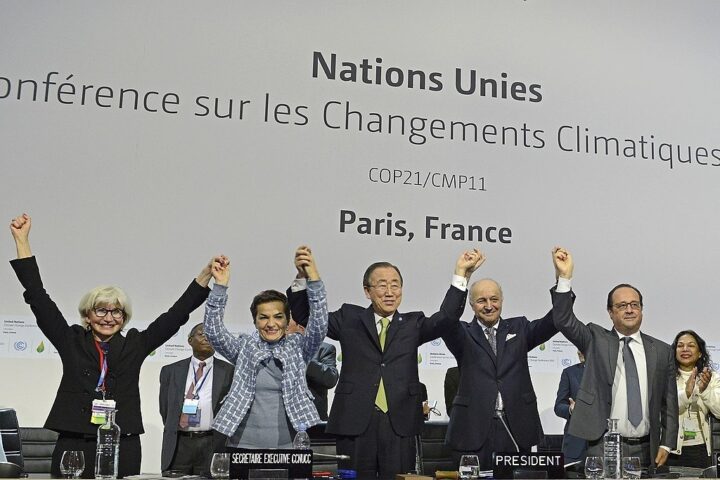
Ten years ago this December, the Paris Agreement was gavelled through at the end of the COP21 climate summit. A landmark agreement, it committed its nearly 200 signatories to act to limit temperature rises to ‘well below 2°C’ but aiming for 1.5°C.
A core part of the treaty is a requirement that parties make pledges (Nationally Determined Contributions – NDCs) each five years on how they will cut emissions and adapt to our heating planet. For the world’s wealthiest nations, those pledges must include how they plan to help developing nations at the forefront of climate impacts to finance the transition, and cope with the costs and losses from worsening climate impacts.
Momentum
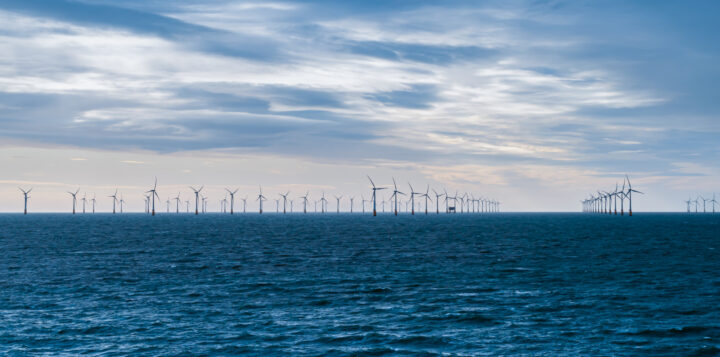
Back then we were looking down the barrel of more than 4°C of global temperature rises this century. But since 2015, deployment of renewables has been a runaway success as costs of those technologies – wind and solar in particular – have fallen sharply.
Then, an endeavour that seemed to represent insurmountable costs is now an opportunity measured in the trillions of dollars globally. The International Energy Agency calculates investment in renewables this year is expected to be worth more than $2 trillion – twice the level of investment in fossil fuels. And as a result, around a third of global power was generated by renewables last year, and our outlook for this century is now for heating of more like 2.6°C.
That level of heating would still be catastrophic – existential for too many parts of the world. And emissions are not shifting yet by anything like enough to get on track for 1.5°C. But we would be in a very much worse situation without Paris.
And lest we believe the naysayers that it’ll never happen, even the world’s biggest emitter, China, now appears to be bringing their emissions down and reaching the peak of their demand for oil; little wonder as they account for around a third of global investment in renewables with their clean energy exports alone accounting for a 1% fall in global emissions.
The next big push
In just a few weeks, before that tenth anniversary, COP30 kicks off, hosted by Brazil, in the city of Belém. This will be the first since Glasgow in 2021 to be hosted in a functioning democracy – the first since then, when civil society will be able to march through the streets to call on world leaders to act.
World leaders arrive before COP, and then the rest of the climate world – those who can afford the (at time of writing) ludicrous accommodation prices in a city ill-equipped to host such a large event – descend to attempt to close that gap between 2.6° and 1.5°C further.
Once again, they come together at a time of ever more terrifying and dangerous climate impacts in all parts of the world. 2025 is jostling with its two predecessors for title of hottest year on record – the ten hottest years on record will be the last ten years.

Brazil’s COP President-designate, veteran diplomat André Corrêa do Lago, has written frequently (and very eloquently!) to countries since being nominated – doing far more this year than the current COP president, Azerbaijan’s Mukhtar Babayev who, after a fairly ineffectual presidency, has not even managed to ensure his country submitted its new NDC to the UN’s deadline.
Corrêa do Lago characterises the job ahead as a “Global Mutirão” – that is, using a concept from Brazilian Indigenous cultures, a ‘collective effort’, with the community coming together to work on a shared task. That mutirão he frames as incorporating three interconnected priorities for his presidency:
- Reinforcing multilateralism and the climate change regime under the UNFCCC;
- Connecting the climate regime to people’s real lives and the real economy; and
- Accelerating implementation of the Paris Agreement.
In practical terms, we can expect the focus in the run-up to, and in negotiations in Belém, to shape around four areas.
Ambition – nationally determined contributions (NDCs)
Ahead of COP, all countries are expected to submit their new NDCs pledging action to 2035. By mid-year, relatively few had done so. According to Climate Action Tracker, those submitted by mid-year accounted for around 19% of global emissions (on 2022 numbers).
That does include the US – submitted under Biden. Since then, the US has withdrawn from the Paris Agreement, and Trump is shredding climate regulations, legislation and funding. But, assessments suggest that all is not lost, and continued delivery by states, cities, companies and organisations below federal level could still achieve a substantial portion of the US’ NDC.
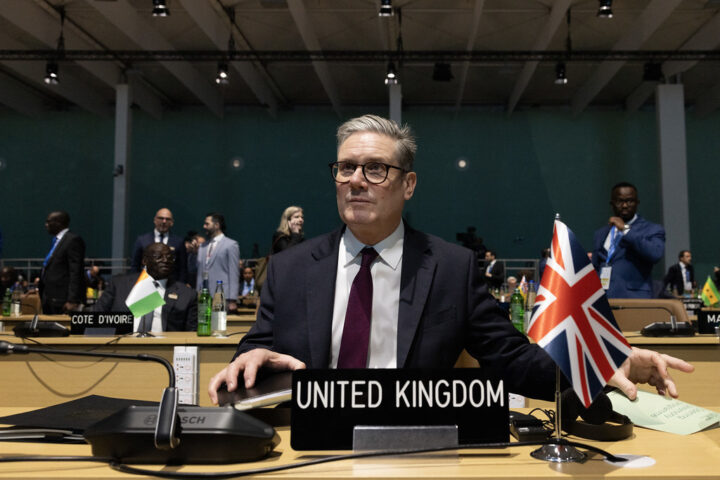
The UK showed leadership that helped impetus at COP29 by offering up an ambitious NDC early (pledging to cut emissions by at least 81% by 2035 on 1990 levels). Incoming COP president, Brazil, did likewise. And whilst the fourth largest emitter, the European Union, has yet to offer up their NDC, when it comes, it will be in the context of their having already committed to 90% emissions cuts by 2040.
Many more are expected to submit around the UN General Assembly, but all eyes are on the largest emitter – China. Speaking very much in the context of the US withdrawal – and apparent wish to sabotage – international organisations and treaties, China’s President Xi Jinping invoked the tenth anniversary of Paris to affirm his own commitment to multi-lateralism, international co-operation, and to “walk the walk” on climate commitments. He pledged that China would bring forward its new NDC before COP30. Since then, several assessments have indicated that China’s emissions are falling for the first time, alongside indications that its reliance on fossil fuels is starting to decline.
Finance
COP29 finished negotiations on the next phase of climate finance – except to the extent that it kind of did not…amidst overrunning talks and diminishing trust from developing nations, COP did land agreement to treble climate finance globally from $100 billion a year to £300 billion a year. However, that was in the context of experts having advised that the need was for £1.3 trillion a year, by 2035. And with the UNFCCC having previously costed out developing countries’ needs from their NDCs at somewhere between $455-584 billion a year by 2030.
Negotiators therefore left Baku with a pledge to work between Baku and Belém on a roadmap to make delivery of both the $300 billion, and that £1.3 trillion, a year credible – via a variety of public and private sources. Progress on that roadmap should become clearer ahead of, but certainly at, COP30. And progress may be critical to building back wider issues of trust from developing countries which felt betrayed by how little was agreed in Baku.
One of the issues in play on climate finance always is where the line is drawn between developing and developed nations. Paris contains a definition and a resulting list. But economies have grown and geopolitics shifted since then. China is the second biggest economy in the world, India the fastest-growing, and any number of small Middle-Eastern states boast absolute and per-capita GDPs that would turn the developed economies of 2015 green with envy. Once again, leadership has emerged on this from China – officially a developing nation under UNFCCC definition. At COP29, whilst reaffirming that responsibility for finance still lies with developed nations, for the first time China used UN climate finance language in relation to having, since 2016, ‘provided and mobilised’ more than $24.5 billion for developing countries – on a par, as Vice Premier Ding Xuexiang has said, with many developed nations. COP28 host UAE – also categorised officially as developing – has also helped in this space, contributing £100m into the loss and damage fund established under their presidency, despite having no formal obligation to contribute to forms of climate finance.
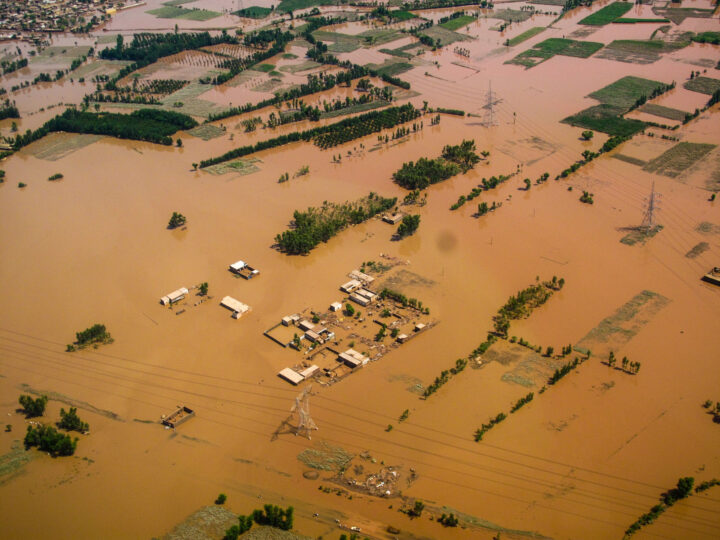
For the UK, we do not know yet what is next on climate finance. Cuts to the overseas development assistance budget earlier in the year put restrictions on the budget from which this has generally come. The Labour government’s pledge to reset UK climate leadership and put climate change at the heart of their foreign policy potentially stand to face some conflict with domestic fiscal pressures, even although climate finance is a small part of ODA – itself a small part of overall public finance. And despite climate finance being an important investment in the resilience of parts of the world we rely on, particularly for our food supply chains. Two fifths of our food comes from overseas; around 17% of imports came from climate vulnerable countries in recent years, including those like Pakistan where worsening climate impacts are accelerating migration away from rural areas, where food is farmed, and towards cities. Climate finance from the UK, via the six biggest multi-lateral global climate funds, helped farmers in projects across 111 countries, 84 of which (76%) grow food sold on UK supermarket shelves.
Action agenda
The action agenda has long been the practical, on-the-ground delivery being driven by each COP presidency’s climate champions, mobilising businesses and other sub-state actors to energise delivery of country-level NDCs. However, it has been subject to what Oxford University’s Thomas Hale calls a “boom-bust cycle that shifting presidencies and high-level champions have imposed on it, in which new announcements trump delivery”.
Brazil’s COP30 presidency have expressed a wish to achieve this – to focus on delivery of pledges and initiatives made and cooked up for COPs, rather than rack up new ones. Apart, that is, from their keenness for COP30 delivering its Tropical Forests Forever Fund (TFFF) to mobilise private capital to maintain and expand cover in tropical nations whose forests are so critical to our global climate.
But leaving Belém with a clear vision beyond 2025 for how the action agenda will deliver across the six areas the Brazilian presidency have set out could be a solid and practical impact from COP30. The six areas are: (1) energy, industry and transport transition; (2) forests, ocean and biodiversity stewardship; (3) transforming agriculture and food systems; (4) city, infrastructure and water resilience; (5) fostering human and social development; and (6) unleashing finance, technology and capacity building as critical enablers and accelerators.
COP reform
No COP is complete without calls for reform. There is no doubting that the UN process is not going fast enough to limit temperature rises to 1.5°C, that there is considerable influence from fossil fuel interests, and that developing nations’ increasingly urgent needs are not always the driving force for developed nations’ decision-making and commitments. But it is currently what we have and, as former UNFCCC staffer Joanna Depledge observes:
“The fact is that many of the perceived inefficiencies are not flaws as such, but inherent to a global process where all nations are sovereign and equal – and all want a say. They are also inherent to the very issue of climate change, which, because it is so multifaceted…inevitably spawns an ever-expanding agenda, while attracting ever more government and civil society participants.”
For this, and more from an impressive array of experts on specific aspects of reform, this Carbon Brief piece is worth a read.
In it, Princeton’s Navroz K Dubash suggested that “A bumper sticker for reform of the UN climate talks might read: ‘Less talk of ambition; more action on implementation’”. Perhaps this is what will be achieved if André Correa do Lago’s global mutirão really does lead to gripping COP’s action agenda to turn the focus to implementation. It would be fitting if it were to be so in Brazil - 30 COPs on, after the UNFCCC was born from the 1992 Earth Summit, also hosted by Brazil, in Rio de Janeiro.
But even if, as so often happens, it falls short of hopes and expectations, it is helpful to remember the inflection point represented by Paris in 2015 and the global momentum away from fossil fuels that it has built, and that this COP process remains a centre point for keeping that momentum going, and limit the costs and risks posed by runaway climate change.
Share