COP31 - what lies ahead?
As the next UN climate summit approaches, we take a look at what's up for discussion

By Gareth Redmond-King
@gredmond76Share
Last updated:
31 and counting

We’re heading into the 31st set of UN climate talks – COP – this November. Taking place annually, COP now routinely comes around after yet another year of dangerous and frightening impacts. 2026 is no exception, from extended extreme heat in Europe to devastating floods in the Himalayas that between them claimed many thousands of lives. Nepal’s Foreign Minister urged big polluting nations to wake up to the shared responsibility to act as recurring disasters remind us we are not cutting emissions fast enough to halt climate change and limit the growing danger.

Momentum
It’s hard not to feel the weight of it all, then – especially as there are always plenty of ‘but what’s the point of it all’ voices, around COP. But it is also worth reminding ourselves that COP31 takes place in a world heading for (an admittedly still very dangerous) 2.6°C of warming, rather than 4°C, as previously, in which emissions growth has slowed fivefold. Renewables provide nearly a third of the world’s power and even China, the biggest emitter, is now seeing emissions turning downwards. Action since the Paris Agreement in particular has driven a global momentum that now sees the $3.4 trillion international energy market investing almost twice as much in renewables as in fossil fuels.
Geopolitical complexity
But COP31 also takes place in very trying geopolitical times. American retreat from global institutions and treaties (including the UNFCCC), coupled with chaotic US involvement in trade wars and actual wars, is speeding the evolution of a more complex, multipolar world with seemingly fewer rules. With Russia and China eying both Iran war-driven US weapons depletion, and Trump’s ambivalence (or occasional outright hostility) to former allies, defence is top of most nations’ list of concerns.
Shortages and rocketing prices from disruption of trade routes – war-torn Strait of Hormuz, Black Sea and Red Sea, and drought-hit European rivers and Panama Canal – have made all nations poorer, and rich nations less inclined to offer overseas assistance and climate finance. Yet at the same time these crises spotlight the clean transition as a means towards greater energy security. And China – still the biggest emitter, still an authoritarian state with designs on neighbouring nations – is leading the way on that transition, even letting it be known it may be considering bidding to host COP33 in two years’ time.
Who's hosting
In the meantime, this year’s COP hosts are Türkiye. Well, Türkiye and Australia, in theory, but Turkish Minister of Environment, Urbanisation and Climate Change, and COP31 President-Designate Murat Kurum has recently made clear who holds the gavel. Australia, in the form of its Minister for Climate Change and Energy, Chris Bowen, wields the title of President of Negotiations. In the most physical sense, though, Türkiye hosts COP in the resort city of Antalya, on the Mediterranean coast.
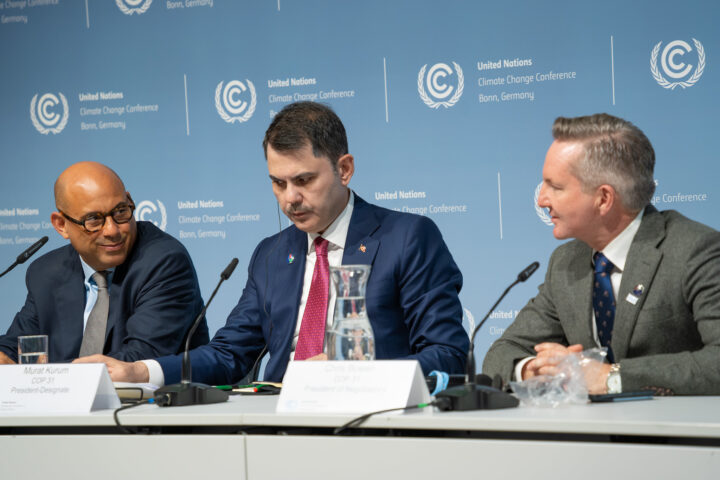
In Bonn, and in their first communications during the year, the (sort of) joint presidency has made clear that their focus is on implementation. Their third letter to parties, in August, set out 10 priority themes, none of which come as any surprise and most of which are self-explanatory:
(1) clean energy transition and electrification; (2) zero waste and methane reduction; (3) climate-resilient cities; (4) green industrialisation; (5) youth and education; (6) food security; (7) oceans and seas; (8) dynamic and resilient health systems; (9) Rio synergies; and (10) climate implementation bridge.
For the less self-explanatory ‘Rio synergies’, these relate to land-use – building on “momentum of previous COPs to strengthen coherent actions across climate, biodiversity, and land agendas through coordinated ecosystem restoration, carbon-sink protection, sustainable land management, and cross-convention cooperation.” And the climate implementation bridge is an initiative focused on supporting the translation of nations’ climate and development priorities into finance-ready projects.
Electrifying the action agenda
That focus on implementation means COP’s ‘action agenda’. This originated at COP20, in Lima – the one before the Paris Agreement at COP21 – to mobilise action beyond the COP parties (like civil society, businesses, and sub-state actors like cities, for example) to drive implementing Paris. This is generally led by the High-Level Climate Champion which each COP presidency appoints – for COP31, this is Samed Ağırbaş, who is currently President of the Zero Waste Foundation. COP30 aimed to strengthen the role of the action agenda and launched the ‘global implementation accelerator’ to “establish an enduring process oriented towards identifying and accelerating Global Climate Action Agenda initiatives through specific actions on the ground and the mobilisation of all actors”. COP31 now seeks to build on this.
Arguably, this is about gripping the many, many initiatives launched at COPs, by successive presidencies, outwith the formal negotiations. But in case there were not already enough such initiatives, the Turkish presidency is also sponsoring ‘35 by 35’ – a commitment from COP31 for parties to electrify 35% of final energy consumption by 2035. The current rate stands at around 23%, according to the IEA. The thinking behind it is that electrification, alongside strong power sector decarbonisation, creates mutually reinforcing drivers towards cutting emissions. And therefore towards the shift away from fossil fuels.
Transition away from fossil fuels
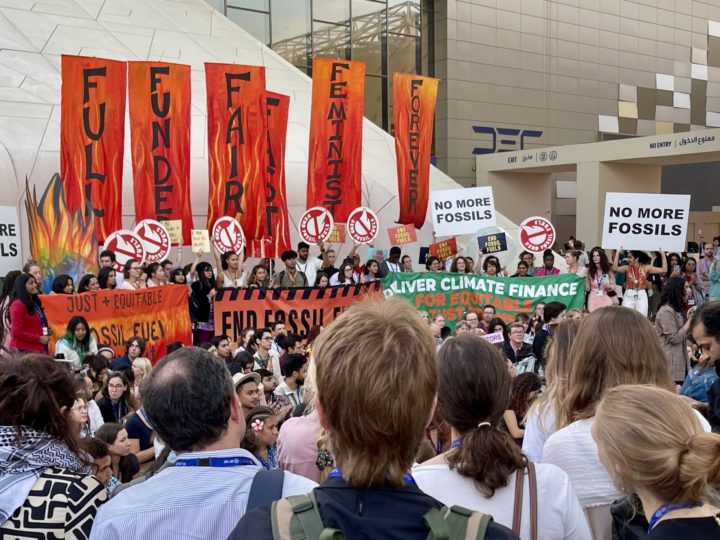
Speaking of which, this was a significant focus at COP30, with a coalition of some 80+ countries emerging to press for inclusion of commitment to a transition roadmap in the final Belém text. This did not happen, but the Brazilian presidency vowed to work with the coalition of nations that emerged, a smaller group of whom signed up to a Belém Declaration, pledging progress on transition away from fossil fuels, regardless of the COP30 outcome.
Colombia – before electing a far-right millionaire to the presidency – had taken the lead, with the Netherlands and, between them, they hosted 57 nations at a summit in Santa Marta in April. The summit concluded with countries committing to produce national roadmaps for transitioning away from fossil fuels, and plans for a next round of the summit, hosted in Tuvalu, jointly with Ireland, in 2027. As of mid-September, only France has produced something that looks like a full-fat plan for transition, with the Netherlands also having produced a plan, albeit one without actual dates for phasing out oil and gas. There is, as yet, no news of the UK’s roadmap, although the UK was represented in Colombia in April by its climate envoy, Rachel Kyte.
Deforestation
The other roadmap under discussion at COP30 was on deforestation – commitments made in previous COP processes to halt and reverse deforestation, which Brazil hoped to move on alongside their creation of the Tropical Forests Forever Facility (TFFF) to use public money to leverage major private sector investment in protection and restoration of tropical forests around the world. Launch of the Brazil presidency’s effort is expected sometime between now and COP31.
Formal negotiations and finance
The two major areas of focus for formal negotiations are the mitigation work programme (MWP) and the global goal on adaptation (GGA).
The MWP is supposed to lead to technical dialogue and a close focus on investment geared to driving up ambition to cut emissions so as to speed implementation through t0 2030. It’s supposed to be about strengthening nations’ pledges under the Paris Agreement – their NDCs – to narrow the gap between global stocktakes on progress. Supposed to… but has seen little progress either in Brazil or at intersessional meetings in Bonn this June.
Absence of finance has been a blocker. Since Russia’s invasion of Ukraine and the US bombing of Iran triggered two global fossil fuel crises, wealthy developed nations have been engaged in fiscal belt-tightening generally, as well as following the US lead in slashing budgets for international development. This, despite the clear evidence of growing need in the form of worsening climate impacts which are destroying lives and livelihoods everywhere. It is also increasingly apparent that the places which the UK and many other countries rely on for food imports are suffering from climate extremes with, now the added fuel on the flames presented by an unprecedented El Niño. Over recent years, some of that UK climate finance has gone to support farmers producing foods which we import, as climate impacts have been driving up food prices.
Having committed, at COP29 in Baku, to trebling climate finance to $300bn a year, major economies have mostly talked up the mobilisation of private finance – far beyond what actually happens in practice – whilst stripping back public finance. This absence of new money commitments has also blocked progress for the adaptation goal. The GGA is focused on building resilience and reducing vulnerability to climate change impacts. As such, it requires investment – which, for poorer, developing nations, means climate finance. Bonn brokered no further movement on it in June, with progress foundering on failure to link the goal to the commitment already made to treble adaptation finance. Instead, the dreaded rule 16 was invoked, which remits further discussion to the next meeting – in this case, COP31 in Antalya.
Without any meaningful shift in terms of the finance on offer – whether from public purses, reform of the multi-lateral development banks, novel levies on things like global financial transactions and fossil fuel extraction, or the mythical but ever-hoped-for private finance – it is hard to see what will shift these work programmes on in Türkiye.
The UK and COP31
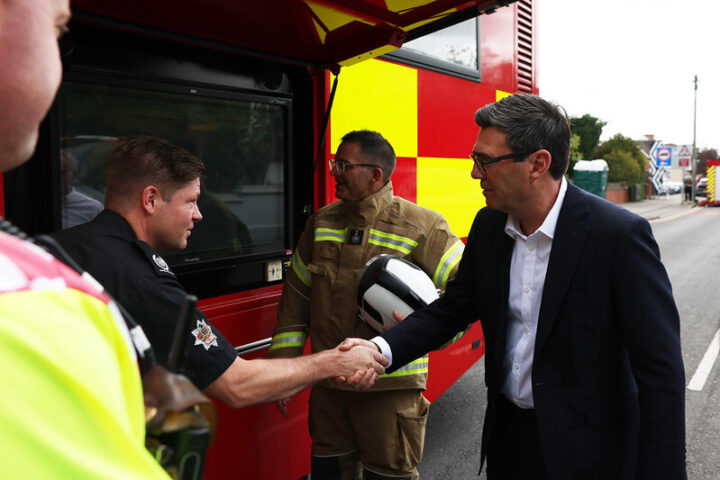
New UK Prime Minister, Andy Burnham signalled fairly early on in office that he intends to go to COP31. With Ed Miliband seeking to convene foreign ministers in New York on the growing threat from climate impacts, we can assume that the new Foreign Secretary is also likely to attend. The formal baton of leading the talks passes, though, to his successor at DESNZ, Miatta Fahnbulleh and the Climate Change Minister, Katie White, who remained in place with the change of PM.
The government was elected in 2024 with a pledge to re-up UK leadership on climate change. PM Keir Starmer turned up to the Azerbaijan-hosted COP that year with an ambitious new pledge, and Foreign Secretary David Lammy had expressed his commitment to putting climate leadership at the heart of UK foreign policy. Having left Baku committed to that trebling of climate finance, however, the UK has, since then, cut its overseas development assistance (ODA) budget sharply.
Whilst climate finance remains roughly the same proportion (20%) of the ODA as it was before, the annual climate finance commitment for the next three years will total around £2 billion; down from around £2.3 billion in each of the last five years. UK total public expenditure for 2025/26 was £1,368 billion, according to the OBR, projected to rise to £1,419 billion in 2026/27, according this a briefing to Parliament. so that £2.3 billion a year of climate finance amounted to 0.17% of last year’s total, and £2 billion this year will amount to 0.14%. Not quite in the trebling ballpark just yet, then, and not the sort of leadership that will give the UK much clout in the Türkiye talks.
All eyes will therefore be upon UK Ministers for signals and commitments before COP. One was forthcoming recently – a much belated pledge to Brazil’s TFFF. However, to the dismay of development experts, it came in the form of a loan, rather than a grant. The other that many will be watching for – potentially dependent on Burnham’s decision over the large Rosebank oil field – will be a UK fossil fuel transition roadmap. These could pave the way for a more constructive and active leadership role at COP31, potentially framing some of the work ahead for 2027, when the UK takes over the chair of the G20 group of nations.
Share